
For Professionals in Adjacent Fields
Your Work Deals With Economy and Place
Economic Development Is Everyone's Business. Find the Guidance Built for Yours.
Economic development shapes the context for almost every profession working in or around the UK public sector. But the field has always presented itself as a closed specialism — with its own language, its own institutions, its own professional community, and an unspoken assumption that if you don’t work within it, you don’t need to understand it.
That assumption is wrong, and its consequences are visible everywhere: planning decisions made without economic intelligence, property investments that misread place trajectory, university strategies that talk about civic engagement without understanding the economic development system they’re trying to engage with, skills provision designed in isolation from real labour market dynamics, policy programmes that repeat the same implementation failures, and community voices marginalised from economic decisions that affect them most directly.
The people who shape places need to understand economic development. Not at the level of professional specialisation, but at the level of genuine working knowledge — the kind that lets you engage credibly, challenge effectively, and contribute in ways that make a difference.
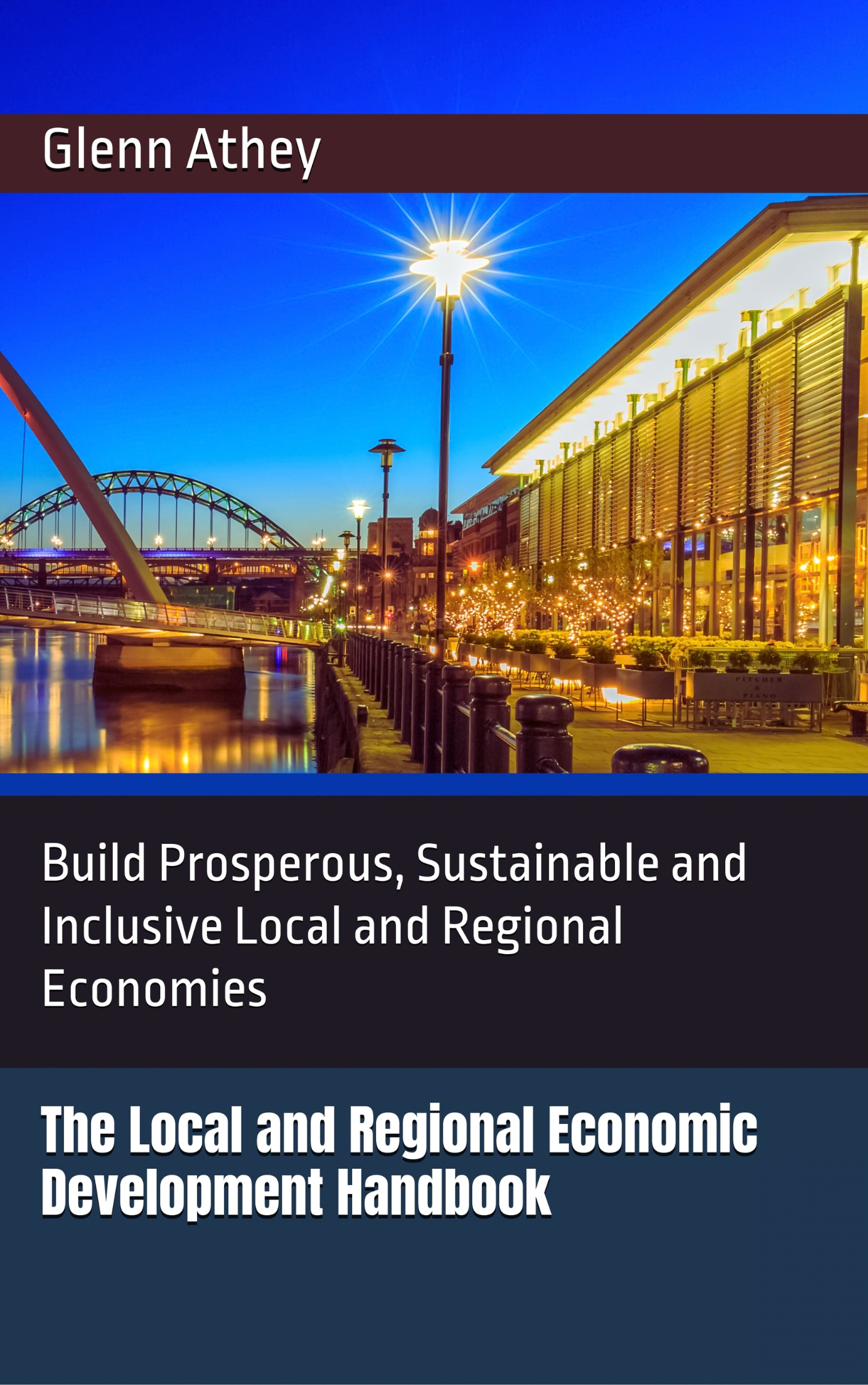
The Local & Regional Economic Development Handbook was written for exactly that purpose. Below you’ll find tailored guidance for each of the professional audiences the handbook serves — what’s most relevant to your work, which chapters to prioritise, and what you’ll be able to do differently once you’ve read it.

For Planning Professionals
Town & City Planners
Understand the economic forces behind the spatial decisions you make every day. Build the evidence literacy to interrogate economic development arguments — and make better ones yourself.

For Real Estate and Property Professionals
Real Estate & Property
The economics of why locations win or lose, how clusters and agglomeration drive commercial demand, and how to engage with the public sector economic development partnerships that increasingly shape your major projects.

For Higher Education Professionals
Universities & Higher Education
Navigate the civic university agenda, knowledge exchange expectations, and local growth partnerships with a genuine understanding of the economic development system you’re expected to help shape — and what that system can and cannot deliver.

For Skills & Employment Professionals
Skills & Employment
Connect provision design, employer engagement, and workforce development to the labour market intelligence and economic strategy that should be driving them. Close the gap between skills supply and real economic demand.

For Government & Civil Servants
Government & Civil Servants
Design, fund, and evaluate economic development interventions with a clear-eyed understanding of why programmes so often underdeliver — and what the evidence says about doing it better in conditions of real political and resource complexity.

For Community Leaders & Anchor Institutions
Community Leaders & Anchor Institutions
Understand the economic development system well enough to engage with it on your own terms — not just as a consultee who is thanked and summarised in an appendix, but as a voice with the knowledge and language to shape outcomes.
Ready to advance your knowledge, skills and practice?
Chapters in the book
PART I: FOUNDATIONS
1. Rationale 11
2. Introducing Local & Regional Economic Development Functions 33
3. Megatrends 53
4. Essential Economics 71
5. Policy 99
6. Strategy 129
7. Informed Decision-Making 165
8. Economic Development Theories 187
PART II: PRACTICE
9. Industrial Development & Clusters 225
10. Enterprise & Entrepreneurship 261
11. FDI and Inward Investment 303
12. Innovation 339
13. Education & Skills 369
14. Economic Participation, Employability, & Unemployment 403
15. Poverty & Inequality 435
16. Place, Infrastructure & Real Estate 469
17. Low Carbon, Climate Change, & Sustainability 495
PART III: CONCLUSIONS
18. Applying This Handbook - Key Lessons for Practice 529