
EVERY DECISION THAT SHAPES A PLACE IS AN ECONOMIC DEVELOPMENT DECISION
The Local and Regional Economic Development Handbook
The Practitioner’s Guide for Everyone Whose Work Shapes Places and Economies
Whether you work in planning, property, higher education, skills, government, or community development — the economic forces reshaping UK places are directly reshaping your work. And if you work in economic development itself, you’ve never had a handbook like this one.
The Local & Regional Economic Development Handbook is the comprehensive, honest, practitioner-authored guide to how local economies work, why economic development so often fails to deliver what it promises, and what those working in and around the field can do differently.
ORDER YOUR COPY
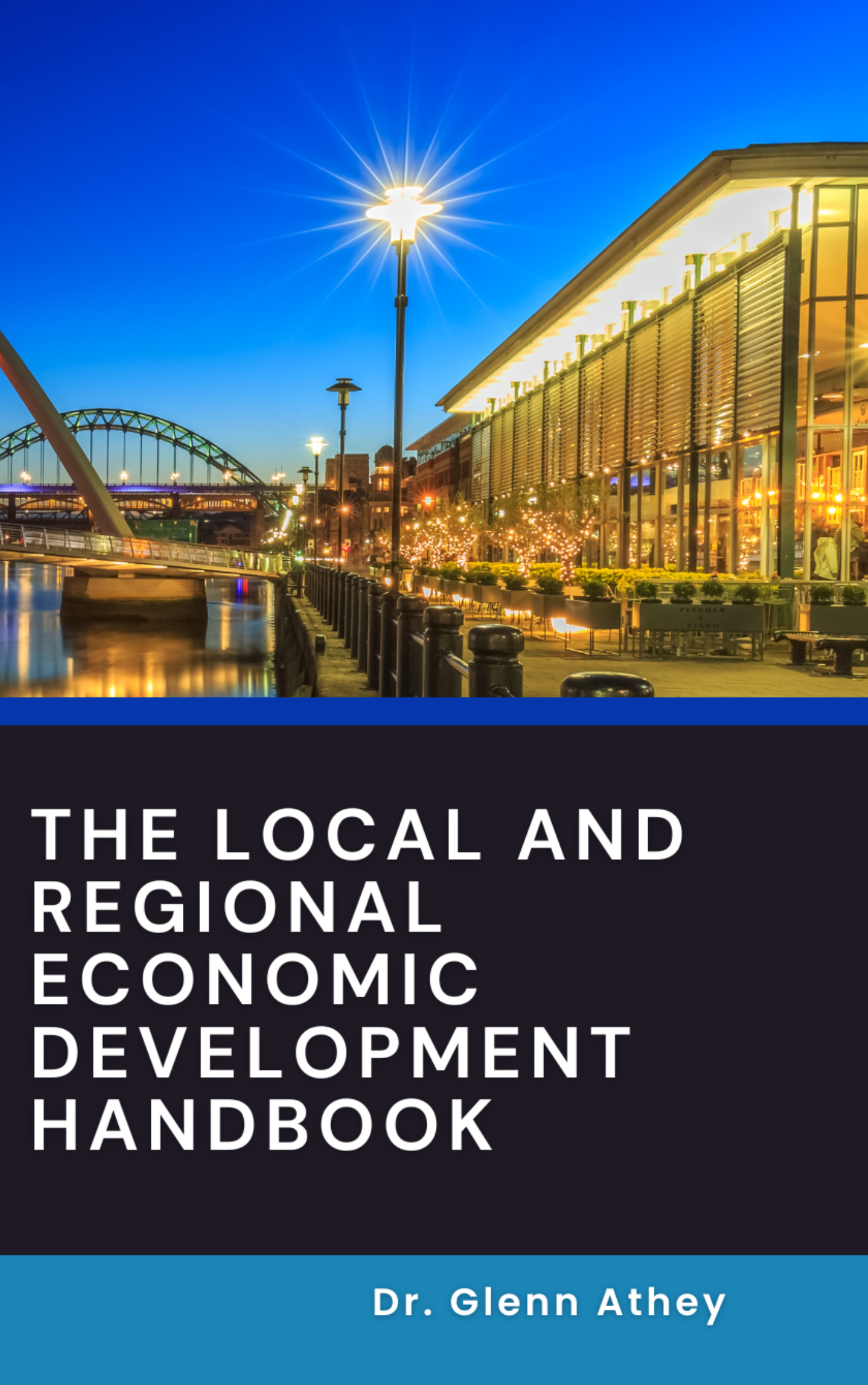
The Practitioner's Guide for Everyone Whose Work Shapes Places and Economies
Written by Dr. Glenn Athey — practitioner, consultant, and academic with thirty-two years of frontline UK economic development experience — this is a 500-page working reference that covers the full breadth of the field. From the economic theory underpinning place-based intervention to the political realities of making strategies actually work, from enterprise and inward investment to skills, inclusion, climate transition, and regeneration. It doesn't tell you what should happen. It tells you how things actually work, where the evidence is strong, where it is contested, and what implementation in the real world requires of the people responsible for it.
There is no other book like it.
I Work in Economic Development
This is the career reference you’ve been waiting for. Whether you’re new to the field, deepening your expertise, leading strategy, or building team capability — 500 pages covering every discipline, grounded in thirty-two years of UK practice. → Find your pathway
I Work in an Adjacent Profession
Planning, property, higher education, skills, government, community development — economic development shapes the context for all of these roles. This handbook gives you the grounding your profession increasingly demands. → Find your pathway

FROM POLICY AND STRATEGY TO DELIVERY AND PRACTICE
Why This Handbook Exists
The economic development field has a problem it rarely discusses openly. Thousands of professionals work within it, around it, or in the shadow of its decisions — and most of them have had to piece together their understanding from textbooks describing individual parts of a system, academic journals that synthesise nothing into practice, and government documents that describe what should happen while staying silent on how.
The consequences are real. Strategies that are technically coherent but practically undeliverable. Interventions designed without understanding the economic dynamics they’re supposed to change. Policy programmes that repeat the same implementation failures because the lessons were never systematically captured and shared.
Dr. Glenn Athey has spent thirty-two years working in that gap — between what economic development theory promises and what practice actually delivers. This handbook is his attempt to close it. Not with optimism or prescription, but with rigour, honesty, and the kind of hard-won practical wisdom that only comes from having been responsible for outcomes rather than just for reports.
The Practitioner's Guide for Everyone Whose Work Shapes Places and Economies
What This Handbook Covers
Seventeen chapters across three parts, covering the full breadth of local and regional economic development:
Part One — Foundations How local economies work. The economic theory underpinning place-based intervention. The history and evolution of UK economic development policy. The institutional landscape — from Combined Authorities and LEPs to Whitehall departments and development agencies.
Part Two — Core Practice Areas Enterprise support and business development. Inward investment and sector strategy. Innovation and knowledge economy. Skills and workforce development. Inclusive growth and economic justice. Place-making, town centres, and the built environment. Climate transition and the green economy. Evaluation and evidence.
Part Three — Practical Realities Economic development strategy — how it’s made and why it so often doesn’t work. Implementation — the persistent failure patterns and what they mean for practitioners. Politics, stakeholders, and the institutional dynamics that shape what’s possible. The future of UK economic development in a devolved, post-Brexit, net zero context.

About the Author, Dr. Glenn Athey
I'm an active speaker, facilitator, advisor, and consultancy working with a range of clients in the UK and internationally. I also offer these services:
Speaking and facilitation. Want to know more? Click here.
Retained advisor. Want to know more? Click here.
Professional CPD. I run a professional CPD site and service at economicdevelopment.world
Custom training. Want to know more? Click here.
Consultancy: Looking for full consultancy support? Visit mylocaleconomy.org.
The Practitioner's Guide for Everyone Whose Work Shapes Places and Economies
Who This Book Is For
Economic Development Practitioners The comprehensive career reference for everyone in the profession — from new starters to directors, from specialists to generalists, from local authorities to national programmes. → Find your level
Town & City Planners Bridge the gap between spatial decisions and economic outcomes. Build the evidence literacy to interrogate the economic cases put in front of you. → For planners
Real Estate & Property Understand the economic forces — agglomeration, cluster dynamics, place trajectory — that determine long-run location value and where occupier demand will genuinely concentrate. → For property professionals
Universities & Higher Education Navigate the civic university agenda and local growth partnerships with a proper understanding of the economic development landscape you’re expected to help shape. → For HE professionals
Skills & Employment Connect provision design and employer engagement to the labour market intelligence and economic strategy that should be driving them — but often isn’t. → For skills professionals
Government & Civil Servants Design, fund, and evaluate economic development interventions with a clear understanding of the implementation failure patterns that have defined the UK’s regional policy record. → For civil servants
Community Leaders & Anchor Institutions Understand the economic development system well enough to engage with it on your own terms — not just as a consultee, but as a voice that shapes outcomes. → For community leaders
Teams & Organisations Build shared frameworks, common language, and collective capability across an economic development team, Combined Authority, LEP, or consultancy. → For organisations
What Makes This Book Different
- Some American textbooks and handbooks are very good, but describe different institutions and contexts and mostly focus on investment attraction
- Academic journals rarely synthesise insights into practical guidance
- Government documents describe WHAT should happen, not HOW
- Until The Local and Regional Economic Development Handbook was published, no single resource covered the full breadth of the field
Until now.
This handbook is written by a practitioner, for practitioners. It acknowledges complexity, embraces difficulty, and focuses relentlessly on implementation and delivery. It includes all functional aspects of local and regional economic development, brought to life in practice, with case studies; and also provides insight on the policy, strategy, action planning and economic foundations of economic development with practical case studies and illustrations.
★ Practitioner authored
Not written from an armchair or a library. Written by someone who has spent thirty-two years responsible for the outcomes — sitting across the table from clients, defending recommendations to elected members, watching well-designed programmes fail to deliver what they promised, and figuring out why.
★ Honest about failure
Most professional references in this field describe best practice. This one is equally interested in why things go wrong — and why they go wrong so consistently. The UK has a four-decade record of regional economic development policies that underdeliver. Understanding that record is essential to doing better.
★ Grounded in real experience
Built around real institutions, real policy history, real funding architectures, and the specific challenges of real places. Existing handbooks are good but only cover part of the system. This handbook describes the whole system.
★ Implementation First
Theory and strategy matter. But the gap between strategy and delivery is where most economic development value is lost. This handbook takes implementation seriously — as a discipline, as a challenge, and as the thing that ultimately determines whether any of the rest of it makes any difference.
DR. GLENN ATHEY
About The Author
Glenn grew up in Gateshead watching an entire regional economy disappear. The coal mines, the shipyards, the engineering plants that had made Tyneside prosperous for a century — gone within a decade. That experience of industrial collapse and the painfully slow, partial recovery that followed shaped everything that came after: thirty-two years trying to understand why places fall behind, and what can genuinely be done about it.
He has worked as a consultant on hundreds of projects with Combined Authorities, Local Enterprise Partnerships, and local governments across the UK. His academic research at the University of Birmingham focuses on why economic development programmes so often fail to deliver what they promise — the implementation doom loop that has defined British regional policy for forty years.
He wrote this handbook because the field needed one that told the truth.

News and Views
Is your business and stakeholder engagement too low? tips and advice to address this
𝙃𝙤𝙬 𝙩𝙤 𝙗𝙤𝙤𝙨𝙩 𝙚𝙣𝙜𝙖𝙜𝙚𝙢𝙚𝙣𝙩 To maximise participation in workshops, interviews, and surveys, pitch relevant questions and repeat online events. Consider purchasing business samples from marketing databases to expand reach. 𝗖𝗹𝗲𝗮𝗿𝗹𝘆 𝗲𝗺𝗽𝗵𝗮𝘀𝗶𝘀𝗲 𝘁𝗵𝗲 𝗿𝗲𝘀𝗲𝗮𝗿𝗰𝗵’𝘀 𝗽𝘂𝗿𝗽𝗼𝘀𝗲 𝗮𝗻𝗱 𝗶𝗺𝗽𝗮𝗰𝘁 𝗼𝗻 𝗲𝗮𝗰𝗵 𝘀𝘁𝗮𝗸𝗲𝗵𝗼𝗹𝗱𝗲𝗿 𝗴𝗿𝗼𝘂𝗽: 𝗞𝗲𝘆 𝗲𝗻𝗴𝗮𝗴𝗲𝗺𝗲𝗻𝘁 𝘁𝗶𝗽𝘀: ** Tailor questions to different groups.** Piggyback on existing meetings and events… […]